Let’s be honest: most classic travel guides tell you to completely avoid Southeast Asia from June to October. They paint a grim picture of non-stop torrential downpours, ruined itineraries, and endless mud. But after navigating the region’s wet seasons multiple times, I will let you in on a major secret: The monsoon season is actually one of the absolute best times to travel here.
The landscapes turn into an impossibly vibrant, lush emerald green. Major landmarks like Cambodia’s Angkor Wat or Chiang Mai’s mountain shrines empty out completely. Best of all? Luxury boutique hotels drop their prices by up to 50 percent.
The catch is that you cannot pack a standard summer wardrobe and just hope for the best. Survival out here takes strategic planning. If you handle it right, you won’t just endure the wet season—you will fall in love with it. Here is your ultimate monsoon survival guide and exact packing blueprint.
1. Decoding the Regional Weather Patterns
Before tossing items into your backpack, you have to understand that the “rainy season” doesn’t mean it rains 24 hours a day, 7 days a week. It usually looks like a bright, humid morning followed by a dramatic, heavy afternoon cloudburst lasting an hour or two before clearing up by nightfall.
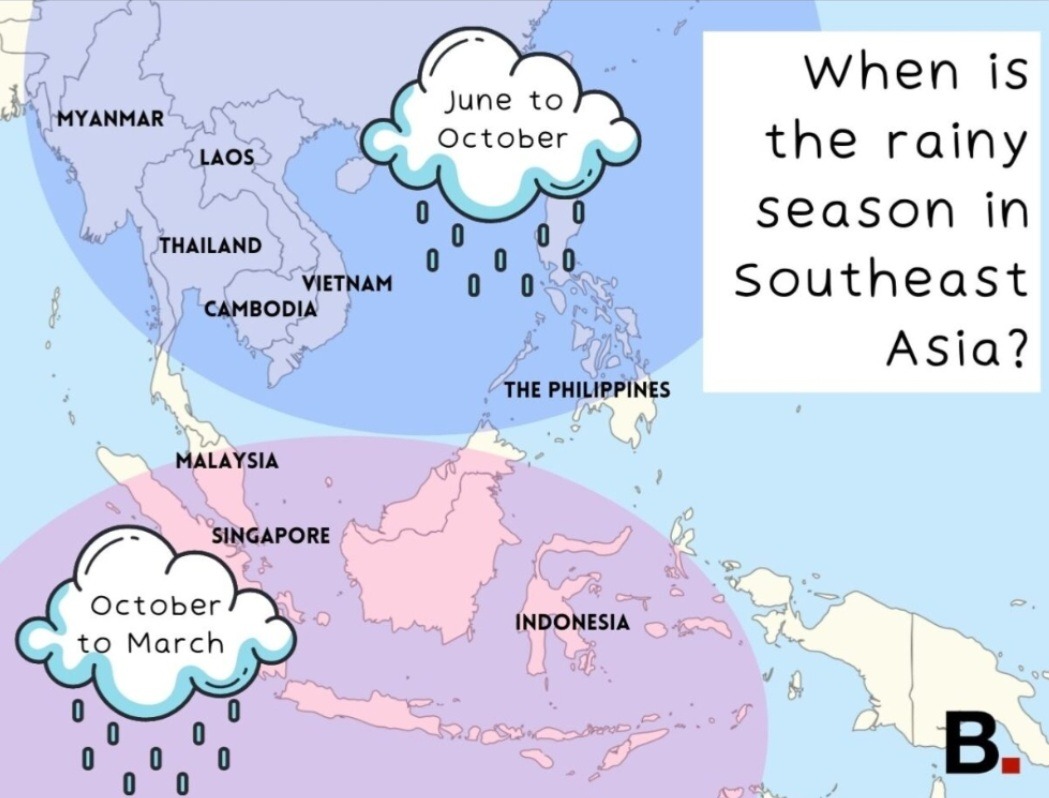
However, geography matters immensely. Southeast Asia’s weather patterns are divided into distinct zones depending on the time of year.
As shown in the graphic above, the traditional June to October monsoon heavily impacts mainland hubs like Thailand, Vietnam, Laos, Cambodia, Myanmar, and the Philippines. Conversely, if you are heading down to Indonesia (like Bali or Lombok), the wet season flips entirely, striking between October and March. Always align your destinations with these geographical shifts to avoid getting stuck in the heaviest regional deluges.
2. The Golden Rules of Monsoon Travel Strategy
Flip Your Daily Schedule: Plan all heavy outdoor sightseeing, temple runs, and complex transits between 8:00 AM and 1:00 PM.
The Afternoon Safe Haven: When the sky turns a deep purple around 3:00 PM, do not get caught exposed on a scooter. Find a local specialty cafe, explore a covered night market stall, or schedule a traditional massage. Embrace the forced slowdown.
Keep Your Transit Options Flexible: Flooding can delay trains and buses. Give yourself a 24-hour buffer day if you have a tight international flight connection to catch.
3. The Ultimate Monsoon Packing Essentials
High tropical humidity combined with sudden cloudbursts means regular cotton clothing becomes your worst enemy. It absorbs sweat and rainwater, staying damp and smelling musty for days. Focus on high-performance, technical travel gear instead.
The Smart Apparel Framework
Quick-Dry Fabrics Only: Pack ultra-lightweight t-shirts, moisture-wicking shorts, and technical-blend long pants. Look for nylon or polyester clothes that can dry completely overnight on a basic hotel clothing line.
Modest Quick-Dry Layers: Temples across Thailand and Bali require covered shoulders and knees. Choose a lightweight maxi skirt or loose, quick-dry linen trousers rather than heavy, sticky denim.
The Packable Rain Shell over Heavy Jackets: Avoid thick, lined winter raincoats—you will bake alive in the tropical heat. You need a breathable, paper-thin waterproof shell jacket featuring underarm ventilation zippers.
Footwear: Forget Leather, Embrace Waterproof Traction
Leave your favorite suede sneakers or canvas slip-ons at home; standing puddles will ruin them instantly.
Packing the right footwear is non-negotiable. Opt for rugged, open walking sandals with deep rubber treads. They grip slick, wet temple stones safely, allow your feet to breathe, and dry out within minutes of a storm passing. Additionally, pack a standard pair of rubber flip-flops for casual walks and beach days—they make navigating the region’s shoe-removal culture at guesthouses and cafes effortless.
Element-Proof Gear and Accessories
A 10L to 15L Marine Dry Bag: This is the single most important item in your daypack. When a tropical storm hits while you are riding a scooter or walking down a street in Bangkok, dropping your camera, passport, and phone into a sealed roll-top dry bag saves you a fortune in water damage.
High-Capacity Power Bank: Heavy monsoon rains can occasionally trigger brief, localized power outages in rural beach towns or remote islands. A quality 10,000mAh or higher power bank ensures your phone stays charged for navigation maps.
Ziploc Bags and Silica Packets: Collect a few small silica gel packets and toss them into your electronics pouch to absorb ambient moisture. Use heavy-duty Ziploc bags to keep physical documents, passport pages, and paper currency completely crisp.
4. Health and Comfort Non-Negotiables
Standing water brings two distinct challenges to the tropics: breeding grounds for insects and localized waterborne bugs.
The Jungle Rule: Mosquitoes multiply rapidly during the wet season, increasing the risk of dengue fever. Stock up on high-strength insect repellent containing DEET or Picaridin. Local drugstore brands (like the ubiquitous Soffell found in almost any Thai or Indonesian convenience store) are highly effective against local insect populations.
Make sure your daily kit also contains:
Oral Rehydration Salts (ORS): Tropical humidity makes you sweat rapidly even on overcast days. Dissolving electrolyte packets into your bottled water prevents dehydration and heat exhaustion.
A Microfiber Travel Towel: Heavy cotton towels take up to 48 hours to dry in monsoon humidity. A premium microfiber towel dries in a fraction of the time and rolls down to the size of a fist.
Broad-Spectrum Sunscreen: Do not let the dense cloud cover fool you; the tropical UV index remains incredibly high right through the gray skies.
5. Final Thoughts: Finding Magic in the Rain
There is something deeply peaceful about sitting on a covered wooden porch in Ubud or a beachside shack in Koh Samui, listening to the thunderous roar of a tropical downpour while sipping hot local coffee. It slows your travel pace down in the best possible way, forcing you to slow down, connect deeply with locals, and take in the authentic atmosphere rather than rushing frantically between checklist attractions.
Pack smart, keep your daily plans flexible, and embrace the green season.